

01
Interview Analysis
Process hundreds of interviews automatically with perfect recall—every word transcribed, every signal extracted, nothing lost to bandwidth limits.

A customer-led workflow
Transform manual research into scalable insights with AI that processes 100x more data, finds hidden patterns, and delivers actionable findings in minutes
Customer evidence

“BuildBetter is becoming our go-to tool for strategic planning.”
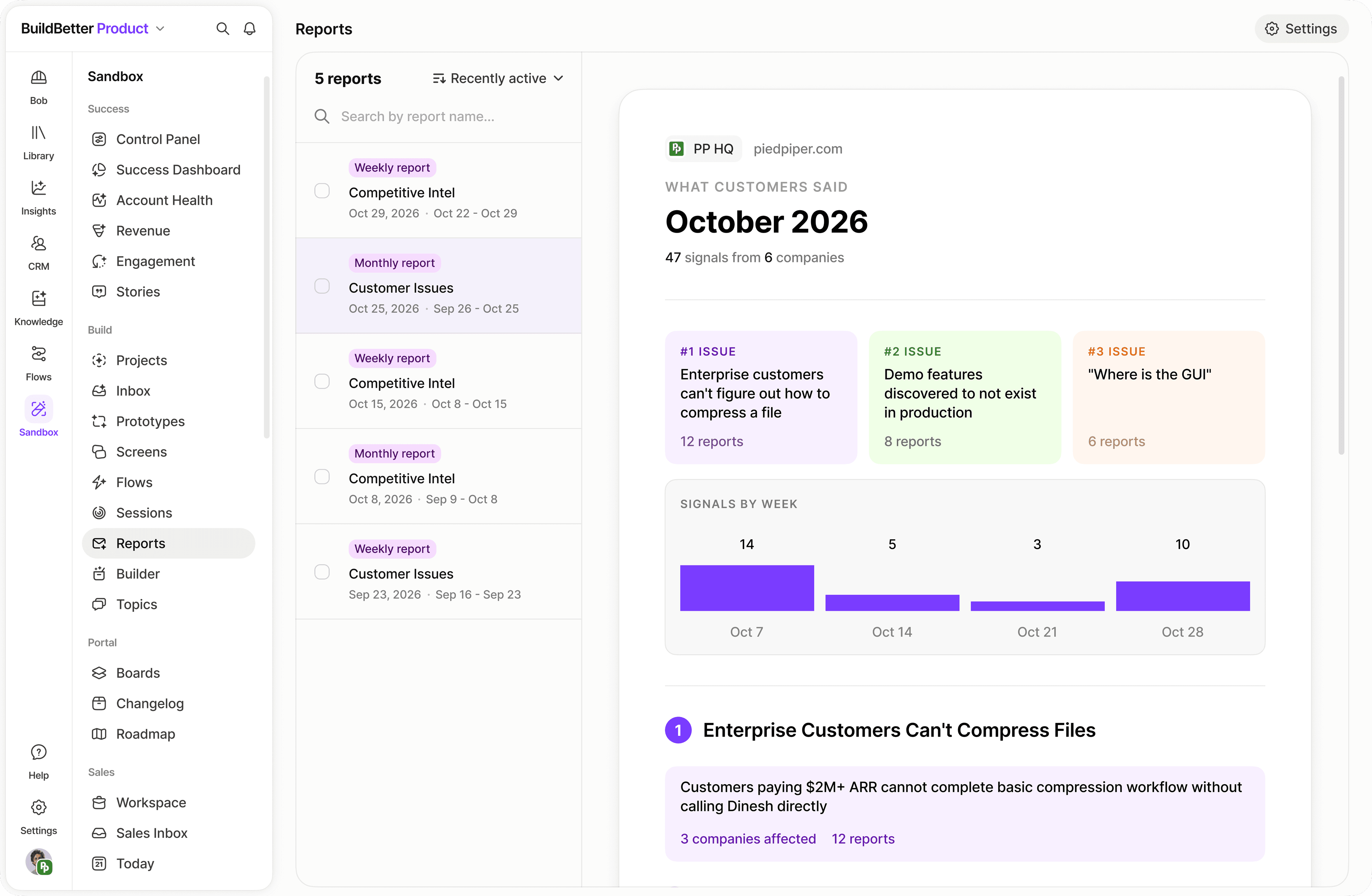
Bring customer feedback together, inspect the source, and carry the evidence into the decision. The example interface below shows how your team can work with that context.
01
Process hundreds of interviews automatically with perfect recall—every word transcribed, every signal extracted, nothing lost to bandwidth limits.
02
AI finds connections and themes humans would never spot by correlating signals across sessions, segments, and time periods.
03
A searchable knowledge base of all research findings, tagged and cross-referenced so anyone on the team can access the right insight at the right moment.
04
From scheduling to synthesis in one automated flow—pre-interview prep, real-time transcription, post-interview summary, and stakeholder distribution.
Connect research channels (user interviews, usability tests, survey platforms, support data) and import the last 6 months of historical research to seed the repository.
Build a research taxonomy covering user segments (enterprise buyers, power users, new users, admins) and insight categories (feature discovery, friction points, delight moments, mental models).
Automate the end-to-end pipeline: auto-schedule interviews, transcribe in real time, extract key insights, tag themes, create summaries, update the repository, and notify stakeholders.
Run meta-analysis across all studies to find patterns that only emerge at scale—longitudinal trend tracking, segment comparison, and hidden behavioral correlations.
Anticipate user needs before they articulate them by modeling behavioral predictions, need anticipation from usage patterns, churn risk indicators, and success predictors.
Track feature success back to driving research insights, compare research-based vs. intuition-based decision outcomes, and measure cost-per-insight improvements.
Build always-on research intelligence with automated weekly interview pipelines, dynamic prioritization of research topics, and self-serve insight portals for stakeholders.
Transform tactical findings into strategic intelligence through opportunity mapping, dynamic persona evolution tracking, and competitive mention analysis.
10x research capacity: go from 5 to 50 interviews per week with one researcher, reduce analysis time from 3 weeks to same-day, and increase coverage from 20% to 95%.
Bring a real question. We’ll walk through the context and the next step together.
Book a demo