A customer-led workflow

Sales Coaching & Feedback

Transform every sales call into a coaching opportunity with AI-powered insights and actionable feedback. Scale what top performers do, ramp new reps faster, and give every rep a self-coaching system they can use without a manager.

Customer evidence

Brex
Looking back, we were lucky to go with BuildBetter. A lot of other tools were extremely rigid. You've genuinely delivered on the tailoring — it's never been easier to work with any company we've bought from, ever.
James WallisBrexRead their story

Know the deal. Keep the commitment.

Start with the account history and original conversation. Use that context to prepare the next step, then share what was agreed with the team delivering it.

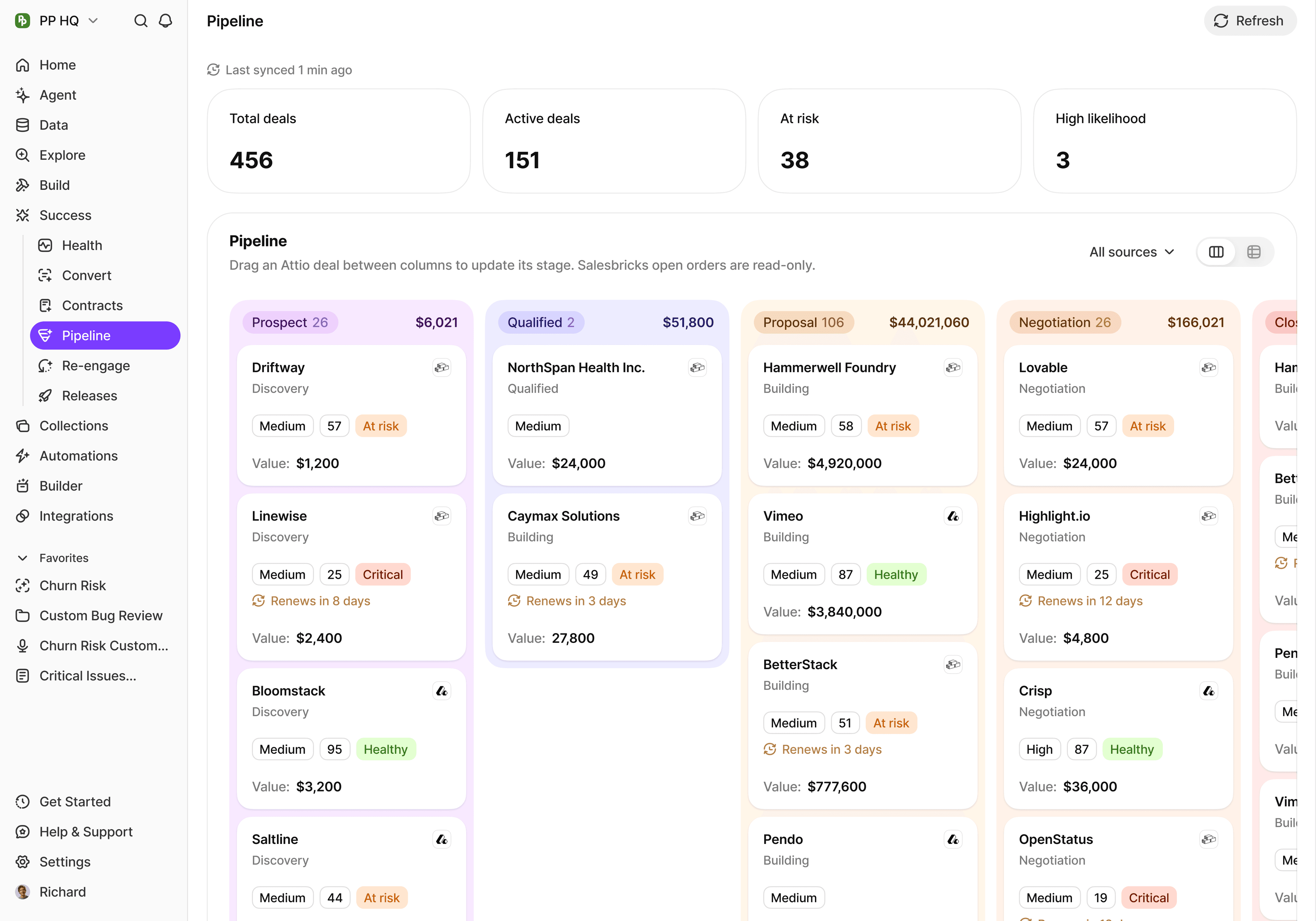
BuildBetter interface supporting Sales Coaching & Feedback
Product example. Inspect findings alongside their customer and source context.

Put it to work.

01

Automatic Call Analysis

Every sales call is automatically scored on key behaviors — talk-to-listen ratio, questions asked, objection handling, closing attempts, and sentiment tracking. No manual review required to get consistent data on every rep.

02

Coaching Moment Identification

AI identifies specific moments in calls that are worth reviewing — a missed objection, a strong discovery question, a weak close, or an excellent rapport-building exchange — with exact timestamps so you can jump straight to the relevant clip.

03

Performance Tracking Over Time

Monitor individual and team progress across weeks and months. Track whether coaching is actually changing behavior and tie specific skill improvements to changes in close rate and pipeline metrics.

04

Best Practice Library

Capture winning talk tracks, great objection handling moments, and exemplary discovery calls into a shared collection. New reps can learn from the team's best examples, not just textbook scenarios.

05

Self-Coaching for Individual Contributors

Sales reps without dedicated coaching can build their own playbook from their actual calls. Review objections, identify what's working, track their talk ratio, and systematically improve — no manager required.

06

AI Coaching Assistant

Query the AI before any call to get recommendations based on similar successful calls in your history. After a call, ask how your performance compared to top performers' approaches for the same type of conversation.

A practical place to start.

Phase 1 — Foundation (Days 1–7)
  1. Define your coaching framework

    Establish clear, measurable criteria for discovery, presentation, and closing skills. Start with 5–7 key behaviors — question quality, talk time, objection handling, next step clarity — before adding more.

  2. Set up automated call scoring

    Build a workflow that triggers after each call ends to analyze the transcript, calculate talk-time ratio, count questions asked, identify missed opportunities, and generate a coaching report sent to the manager dashboard.

  3. Run team calibration

    Review 3–5 calls together as a team. Discuss what 'good' looks like for your specific sales motion, agree on scoring criteria, and create a reference library of gold-standard calls and common mistakes to learn from.

Phase 2 — Active Coaching (Weeks 2–4)
  1. Run data-powered 1:1 sessions

    Spend 5 minutes — not 45 — preparing for each 1:1 by querying the AI for a rep's top 3 coaching opportunities with specific examples from the past week. Structure sessions as: metrics review, watch a clip together, practice, set commitments.

  2. Send real-time post-call feedback

    Set up automated instant feedback in a '3 Stars & 1 Wish' format, delivered within 5 minutes of call end with specific timestamps linked to relevant training resources.

  3. Run weekly team film review

    Share 3–5 call clips — wins and learning moments — as a group, like a sports team reviewing game footage. Document takeaways and build peer learning into the weekly rhythm.

Phase 3 — Advanced Development (Month 2+)
  1. Build personalized development plans

    Use performance data to identify each rep's strengths and gaps. Create tailored learning paths with specific call recordings to review, internal best practices, and practice assignments tied to their development areas.

  2. Establish a self-coaching habit

    For individual contributors: review the first 3 calls deeply in week 1, use the AI to identify objections and what worked, then iterate by applying those learnings in the next set of calls. Build and update your playbook weekly.

  3. Link coaching to revenue impact

    Track coaching ROI by measuring rep performance pre- and post-coaching sprints. Show leadership the connection between behavior change adoption and quota attainment to justify the program investment.

Keep the workflow useful
  • Be specific: reference exact moments with timestamps, not general impressions from memory.
  • Maintain a 3:1 ratio of positive to constructive feedback — reps who feel recognized improve faster.
  • Make every piece of feedback actionable: each coaching point should have a clear next step attached.
  • Follow through on coaching commitments by checking in the next session — accountability drives behavior change.
  • Celebrate improvements publicly, not just results — recognizing skill development builds a coaching culture.
  • For self-coaching reps: review your talk-to-listen ratio weekly. Healthy is 30–40% you, 60–70% prospect. If you're talking more, you're presenting, not selling.

Keep exploring.

Ready to make every call a coaching opportunity?

Bring a real question. We’ll walk through the context and the next step together.

Book a demo