

01
Omnichannel Capture
Automatically collect feedback from every customer touchpoint—calls, support tickets, CRM data, surveys, Slack channels, email, reviews, and social media.

A customer-led workflow
Transform scattered customer feedback into actionable product insights with AI that captures, analyzes, and prioritizes what customers really need
Customer evidence

“BuildBetter is becoming our go-to tool for strategic planning.”
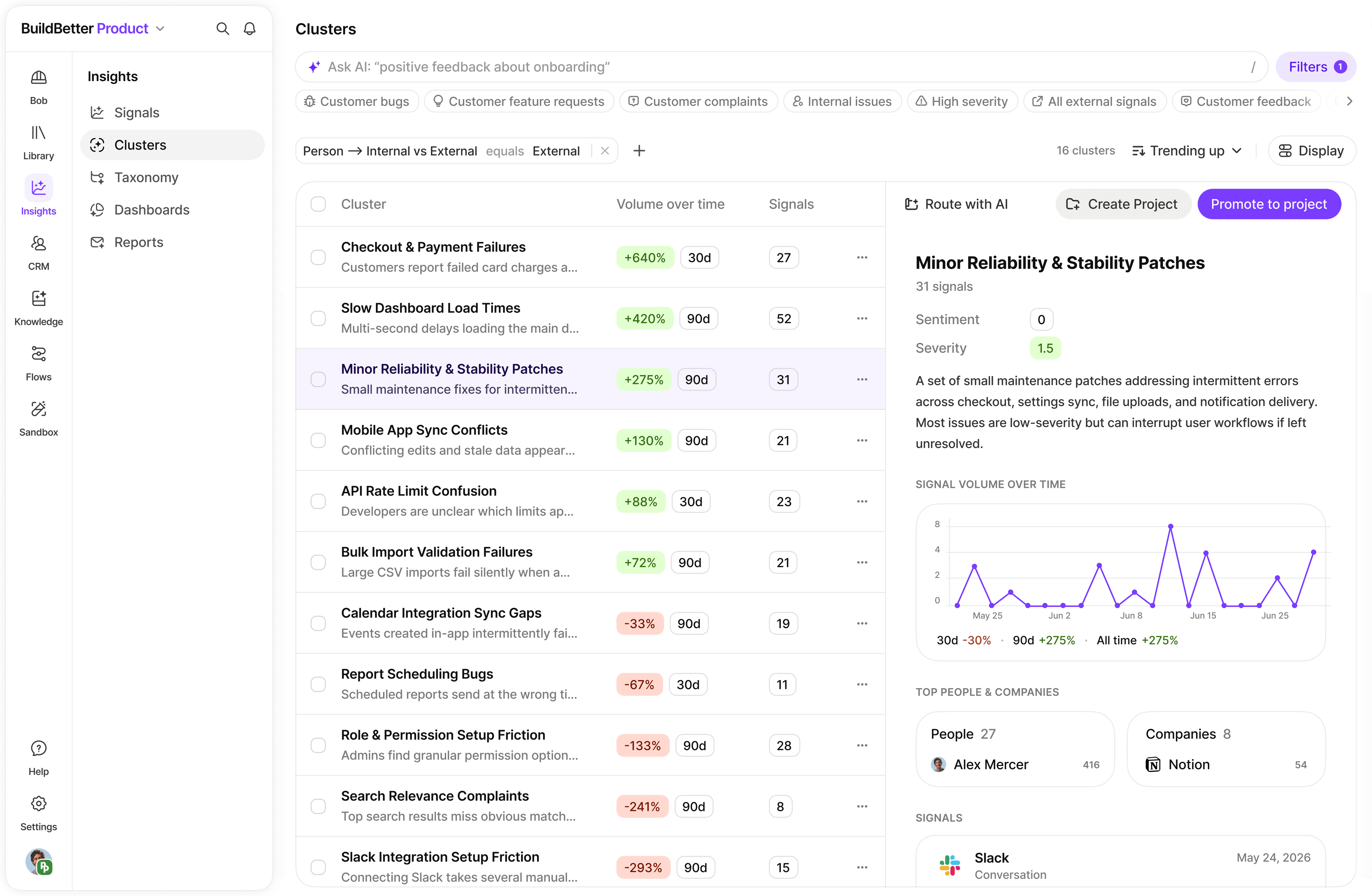
Bring customer feedback together, inspect the source, and carry the evidence into the decision. The example interface below shows how your team can work with that context.
01
Automatically collect feedback from every customer touchpoint—calls, support tickets, CRM data, surveys, Slack channels, email, reviews, and social media.
02
Surface patterns, themes, and insights humans would miss by correlating signals across channels and identifying root causes behind recurring complaints.
03
Quantify impact and effort to focus on what matters most, with impact scores weighing customer revenue, mention frequency, and business impact.
04
Get instant alerts on emerging trends and critical feedback—from enterprise blockers to trending feature requests—the moment they appear.
Set up primary sources (call recordings, support tickets, CRM data, surveys) and secondary sources (Slack, email, reviews, social). Import the last 6 months of historical feedback to seed the system.
Build an AI model that understands your product hierarchy and feedback categories (bug reports, feature requests, pain points, positive feedback) with an impact scoring model weighting customer, frequency, and business factors.
Configure a daily feedback processing pipeline: capture, extract themes, categorize by product area, calculate impact score, identify duplicates, update trend analysis, notify the relevant PM, and create a tracking item.
Let AI find patterns you didn't know existed through automatic theme detection, cross-channel correlation (the same need expressed differently across channels), and trend acceleration tracking.
Turn qualitative feedback into quantitative decisions: model revenue impact per theme, correlate feedback patterns to customer health and retention risk, and size adoption barriers.
Share insights effectively with executive dashboards, engineering prioritization reports, design team UX patterns, and automated customer acknowledgment flows.
Connect feedback data-driven scores directly to product planning, map features to the feedback that drove them, and validate ROI predictions with post-launch measurements.
Automate acknowledgment flows from first response through development milestones to launch notifications, manage beta cohorts from your requester pool, and mine customer quotes for success stories.
Extract strategic insights from competitor mentions in feedback: feature gap identification, win/loss correlation analysis, and positioning insights from what customers value most and least.
Bring a real question. We’ll walk through the context and the next step together.
Book a demo